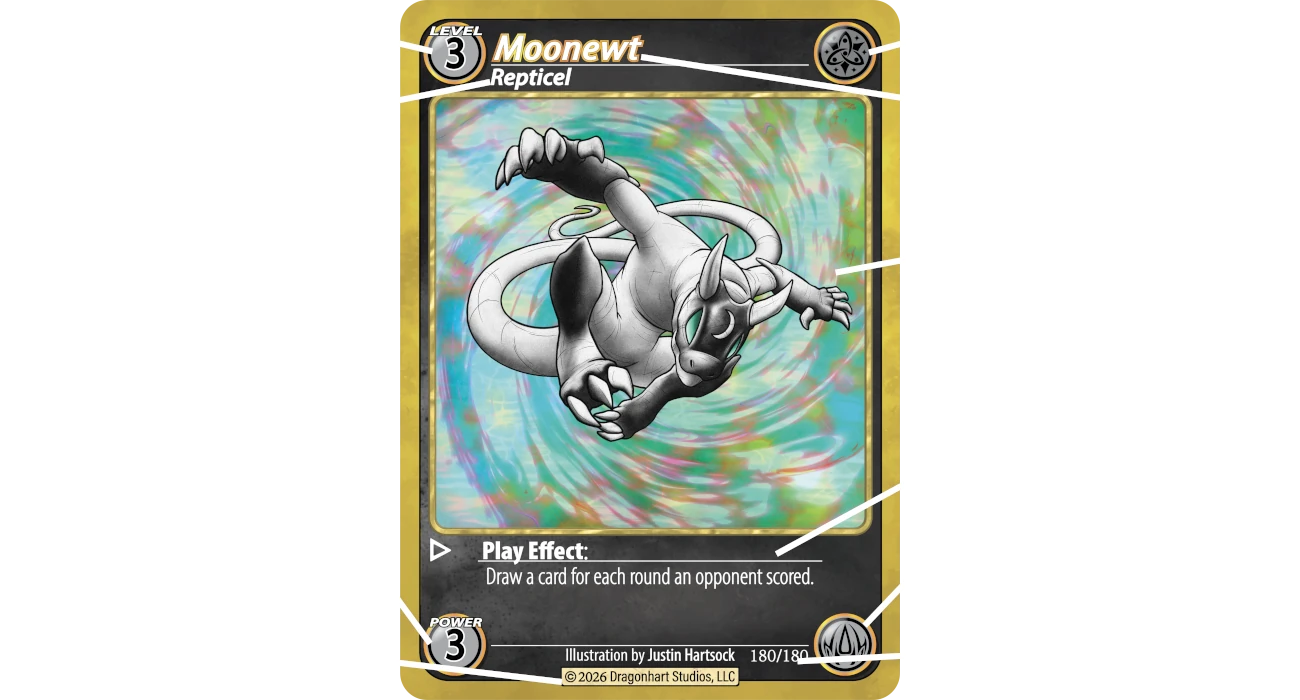
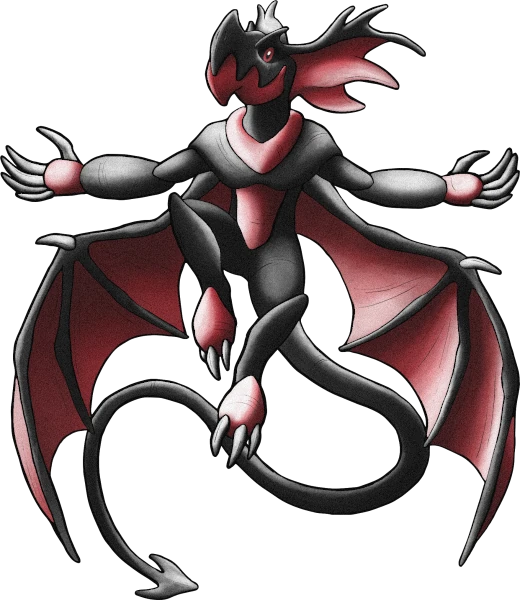
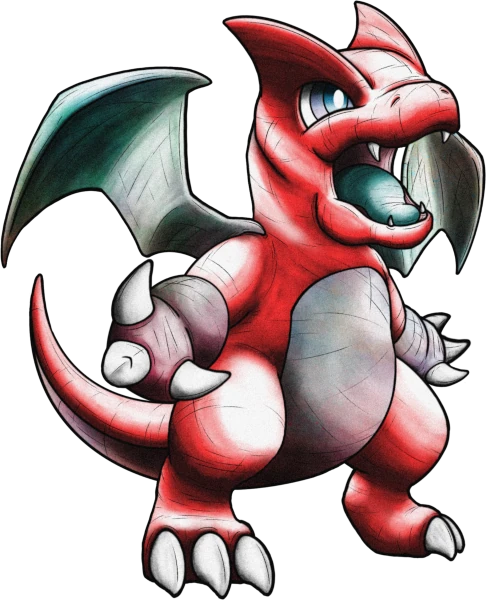
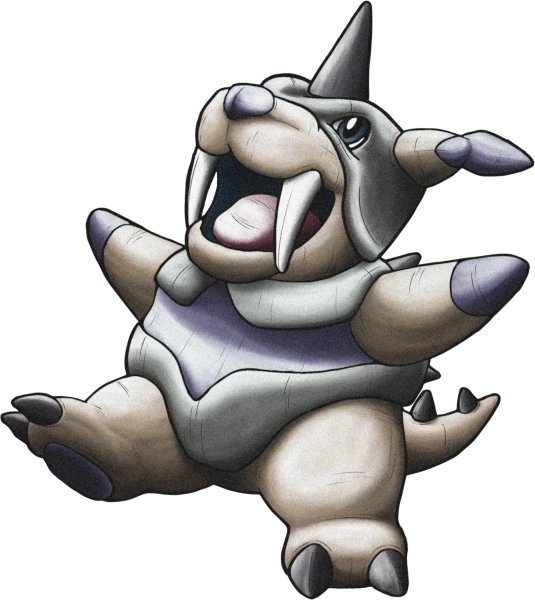
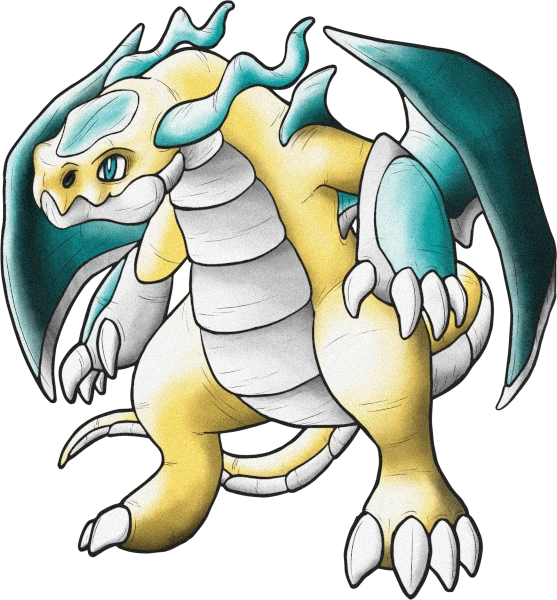
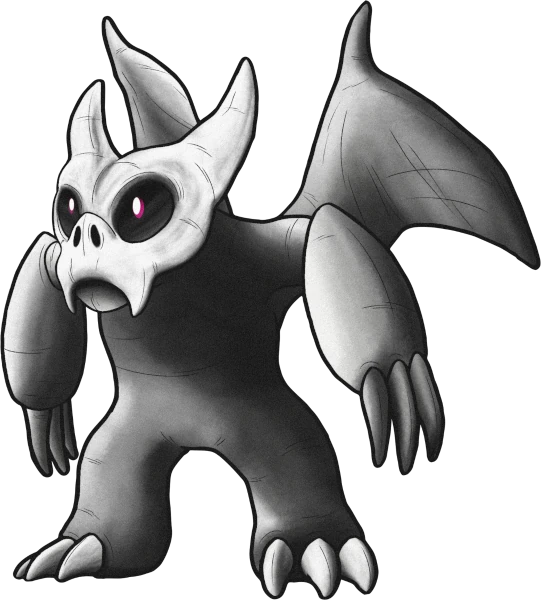
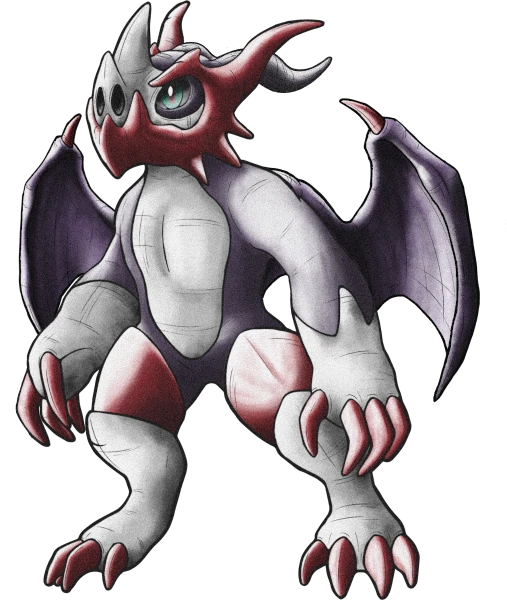
In my mind, I genuinely am looking to create something that brings others joy the same way many tabletop games and collectibles have done for me my entire life. Video games are great, but nothing beats sitting at a table with the right people living in the moment. If you're reading this, I sincerely thank you for taking the time and hope this little passion project of mine brings you and the ones around you some form of enjoyment and positivity.
ELEMENTAL CREATURES is a fast, easy-to-learn trading card game where players build their frontline, level up creatures through the sideline, and compete to outplay and outscore their opponents.
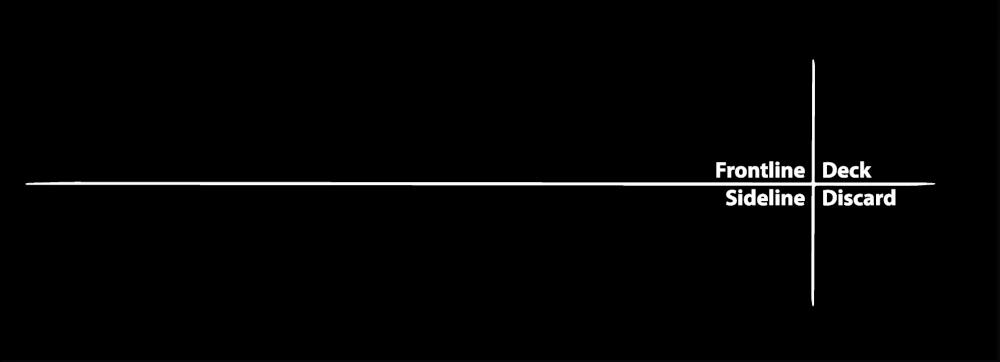
Cards are played in 2 different areas: The FRONTLINE and the SIDELINE, known collectively as the "Play Area."
Cards from your hand are played to the FRONTLINE. Cards move to the SIDELINE during gameplay. Players utilize their SIDELINE cards to play higher level cards from their hand.
Your deck is placed in the Deck area. Cards that are discarded during gameplay are placed in the owner's Discard.
Players take turns performing 1 action each until both players decide to take no action for their turn, otherwise known as "passing." The collection of these turns is called the "Round."
The first turn a player begins a Round by playing a card from their hand to their FRONTLINE.
When a player PASSES, they cannot take any more turns for the remainder of that Round. The last player that has NOT passed can take as many turns as they'd like. Once they choose to pass, the Round ends.
When the Round Ends:
Players calculate the total Power of Creatures on their respective FRONTLINES.
The player with the highest total earns points equal to the difference of those totals. See Earning Points.
Players Rest their FRONTLINE Creatures and Descend their SIDELINE creatures.
Ongoing Effects are acknowledged after the creature is played. These Effects are constantly being applied to the board state of the game and apply while on the player's FRONLINE and SIDELINE.
Play Effects happen the moment a creature enters play and resolve before the turn is passed.
Trigger Effects are acknowledged after the creature is played (a creature can't trigger itself). Depending on the ruling of the specific Trigger Effect, these Effects only impact the game when referenced.
When the Round ends, players calculate the total Power of the Creatures on their respective FRONTLINES.
Once total power is determined, the difference between them is calculated. In this example, Player A has a total Power of 5 while Player B has a total Power of 7, awarding Player B 2 points.
Players draw a card from their deck at the start of each Round, except the first.
The player that earned the least points chooses the player that plays first for the next round.
When a Round ends in a tie, the player that began that Round begins the next Round.
Players do not lose by drawing all cards in their deck.
If Round 4 ends in a tie, the game continues until a player earns any number of points.
Power cannot be reduced below zero.
Creatures may gain an indefinite amount of (-1) Power Counters. When the number of (-1) Power Counters on a Creature exceeds its Power, its Power is considered zero.
(+1) and (-1) Power Counters cancel out. A Creature cannot have both.
A Creature retains (-1) Power Counters when Leveling Up. However, they can be cancelled out when Evolving that Creature.
Creatures keep all (+1) Power Counters when Resting or Retreating and remove all (-1) Power Counters when Resting. All Power Counters are removed when a creature leaves play.
When a Creature becomes Neutralized, remove all Power Counters from them. Neutralized Creatures can't have or gain Power Counters.
Ascend - To move a Creature from your Discord to yourSIDELINE. This is not considered "playing" a card.
Bounce - To return an opponent's Creature from play to its owner's hand.
Descend - To move a Creature you control from yourSIDELINE to the Discard.
Destory - To remove a Creature from play by placing it in its owner's Discard.
Disarm - To remove a Creature's Effect. DISARMED Creatures are treated as if they no longer have an Effect.
Evolve - To LEVEL UP a Creature into another Creature of the same Species. When a creature EVOLVES, the new Creature enters play with (+1) Power Counters equal to the Power of the returned Creature.
Exert - To move a Creature you control from yourSIDELINE to yourFRONTLINE
Intimidate - To move an opponent's Creature from their FRONTLINE to their SIDELINE
Level Up - To play a Level 2 or higher Creature to your FRONTLINE by returning a Creature of 1 level lower from your SIDELINE to your hand. This is not considered WITHDRAWING a Creature.
Mutate - To LEVEL UP a Creature into a Creature of a different Species.
Neutralize - To render a Creature unable to contribute towards its owner's total Power. NEUTRALIZED Creatures are also DISARMED, cannot have or gain Power Counters, and still REST at the end of the Round.
Rest - To move a Creature from your FRONTLINE to your SIDELINE. When a creature RESTS, it is no longer NEUTRALIZED or DISARMED and all (-1) Power Counters are removed.
Restore - To remove the DISARMED and NEUTRALIZED statuses from a Creature.
Retreat - To move a Creature you control from yourFRONTLINE to yourSIDELINE.
Taunt - To move an opponent's Creature from their SIDELINE to theirFRONTLINE.
Teleport - To shuffle a Creature into its owner's Deck.
Venture - To look at the specified number of cards from the top of your Deck and, in an order of your choosing, put them back on top of on the bottom of the Deck.
Withdraw - To return a Creature you control from play to your hand.
Card effects resolve by order of LAST IN, FIRST OUT. This means that the last card effect that triggered is the first to resolve, and resolution moves in reverse order of those triggered effects so that the first effect to trigger should be the last to resolve. When effects trigger simultaneously, the Turn Player resolves their effect first.